








Market Summary:-
According to our research intelo, the Global Plastic Sheeting for Masking Vehicles market size was valued at $1.2 billion in 2024 and is projected to reach $2.1 billion by 2033, expanding at a robust CAGR of 6.5% during 2024–2033. One of the primary factors propelling the growth of this market globally is the continuous expansion of the automotive aftermarket, coupled with the increasing frequency of vehicle painting, collision repairs, and detailing services. The surge in demand for high-quality, efficient, and cost-effective masking solutions is further intensified by advancements in automotive paint technologies, rising disposable incomes, and a growing awareness of vehicle aesthetics and protection. This has led to a significant shift towards the adoption of advanced plastic sheeting products that offer superior performance, environmental resistance, and ease of application, positioning the market for sustained growth over the forecast period.
The Silent Backbone of America’s Automotive Precision Economy
Introduction: The Material You Never See, but Always Trust
In the United States, vehicle perfection is not accidental—it is engineered. From Detroit’s legacy assembly lines to California’s custom paint studios and Texas’s booming collision repair hubs, one unassuming material plays a decisive role behind the scenes: plastic sheeting for masking vehicles.
Often overlooked, this specialized plastic film ensures paint precision, surface protection, and workflow efficiency across America’s automotive ecosystem. As U.S. vehicle ownership grows more complex—with electric vehicles, premium coatings, and strict environmental norms—this market is quietly evolving into a high-value, innovation-driven segment.
Understanding Plastic Sheeting for Vehicle Masking
More Than Just a Protective Film
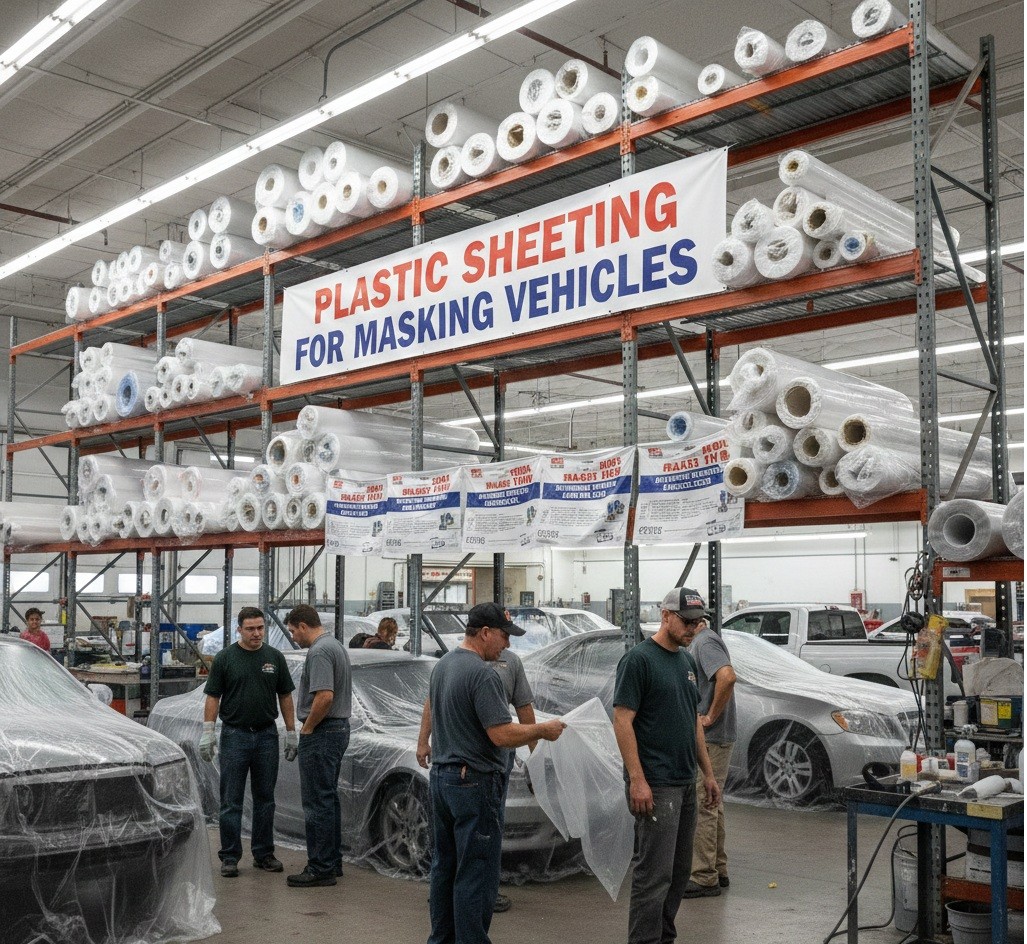
Plastic sheeting used for masking vehicles is engineered to protect surfaces from paint overspray, dust contamination, chemical exposure, and mechanical damage during:
- Automotive painting and refinishing
- Collision repair and bodywork
- Custom vehicle detailing
- OEM manufacturing processes
Unlike generic plastic covers, vehicle masking sheets are designed with:
- Static cling technology to prevent movement
- Paint-absorbent coatings to avoid flaking
- Heat resistance for curing environments
In the U.S. market, quality is non-negotiable—because one defect can cost thousands in rework.
Why the U.S. Market Is Structurally Strong
A Nation Built on Vehicles and Precision
The United States is uniquely positioned for sustained demand due to:
- A Massive Vehicle Population
With over 280 million registered vehicles, the U.S. has one of the largest automotive service ecosystems in the world. Every repaint, repair, or modification requires reliable masking solutions.
- Collision Repair as a Core Industry
From insurance-driven body shops to independent garages, collision repair is a multi-billion-dollar sector. Plastic sheeting ensures:
- Faster job turnaround
- Reduced material waste
- Insurance compliance standards
- Customization Culture
American consumers value personalization—custom paint jobs, wraps, restorations, and specialty finishes. High-grade masking films are essential to deliver sharp lines and flawless results.
Key Market Segments Driving Demand
Automotive Body Shops
Independent and franchise body shops rely on disposable masking sheets to maintain productivity without compromising finish quality.
OEM and Tier-1 Suppliers
Manufacturers use precision masking films during assembly, painting, and quality control to maintain uniformity across high-volume production lines.
Mobile Repair & On-Demand Services
The rise of mobile auto repair services in the U.S. has increased demand for lightweight, foldable, easy-to-deploy plastic sheeting that performs outside controlled shop environments.
Material Innovation: Where the Market Is Headed
Shift Toward High-Performance Polymers
Traditional polyethylene is being enhanced with:
- Anti-static additives
- Multi-layer structures
- Paint-lock coatings
These improvements reduce overspray penetration and eliminate secondary cleanup—an important cost saver for American workshops.
Eco-Responsible Alternatives
With tightening state-level regulations (especially in California and New York), manufacturers are developing:
- Thinner films with equal strength
- Reduced plastic usage per vehicle
- Recyclable and low-VOC materials
Sustainability is no longer optional—it is a market differentiator in the U.S.
Technology Meets Workflow Efficiency
Pre-Folded & Pre-Taped Solutions
American workshops value speed. New formats such as:
- Pre-folded rolls
- Integrated tape edges
- Vehicle-specific dimensions
…reduce setup time and labor costs, directly improving shop profitability.
Compatibility with Advanced Paint Systems
Modern U.S. auto paints—water-based, ceramic-infused, or EV-specific coatings—require masking films that:
- Resist chemical reactions
- Withstand high bake temperatures
- Maintain surface integrity
Competitive Landscape
- 3M
- DuPont
- Kimberly-Clark
- Plymovent
- Trimaco
- PPG Industries
- Axalta Coating Systems
- Saint-Gobain
- Colad International
- Tork
- J-B Weld
- Evercoat
- Gerson Company
- Q1 Tapes
- Advance Paper Company
- DeVilbiss Automotive Refinishing
- JTAPE
- Maco Masking
- Pro-Tect Plastics
- CAR-REP
Challenges the Market Must Navigate
Labor Skill Gaps
Improper masking still leads to material waste. The industry is responding with:
- Training-friendly products
- Error-tolerant materials
- Clear visual alignment aids
Waste Management Pressure
Shops face increasing scrutiny over plastic disposal. This is accelerating interest in:
- Reduced-material films
- Recyclable collection programs
- Supplier take-back initiatives
Future Outlook: Quiet Growth, Strong Foundations
According to our research intelo, The Plastic Sheeting for Masking Vehicles Market in the USA is not flashy—but it is fundamental. Growth will be steady, driven by:
- Aging vehicle fleets
- Rising repair complexity
- EV production expansion
- Demand for flawless finishes
As American vehicles become more advanced, the materials protecting them during transformation must evolve as well.