








Market Summary
According to our Growth Market Report, the global home entertainment devices market size reached USD 313.4 billion in 2025, reflecting robust consumer demand and accelerating technological advancements across the sector. The market is projected to grow at a CAGR of 6.1% during the forecast period, reaching a value of USD 534.8 billion by 2034. This sustained growth is primarily driven by increasing disposable incomes, rapid urbanization, and the continuous evolution of digital content delivery platforms, which are reshaping how consumers engage with home entertainment in meaningful and lasting ways.
Introduction: Why the Home Entertainment Devices Market Is Entering a New Era
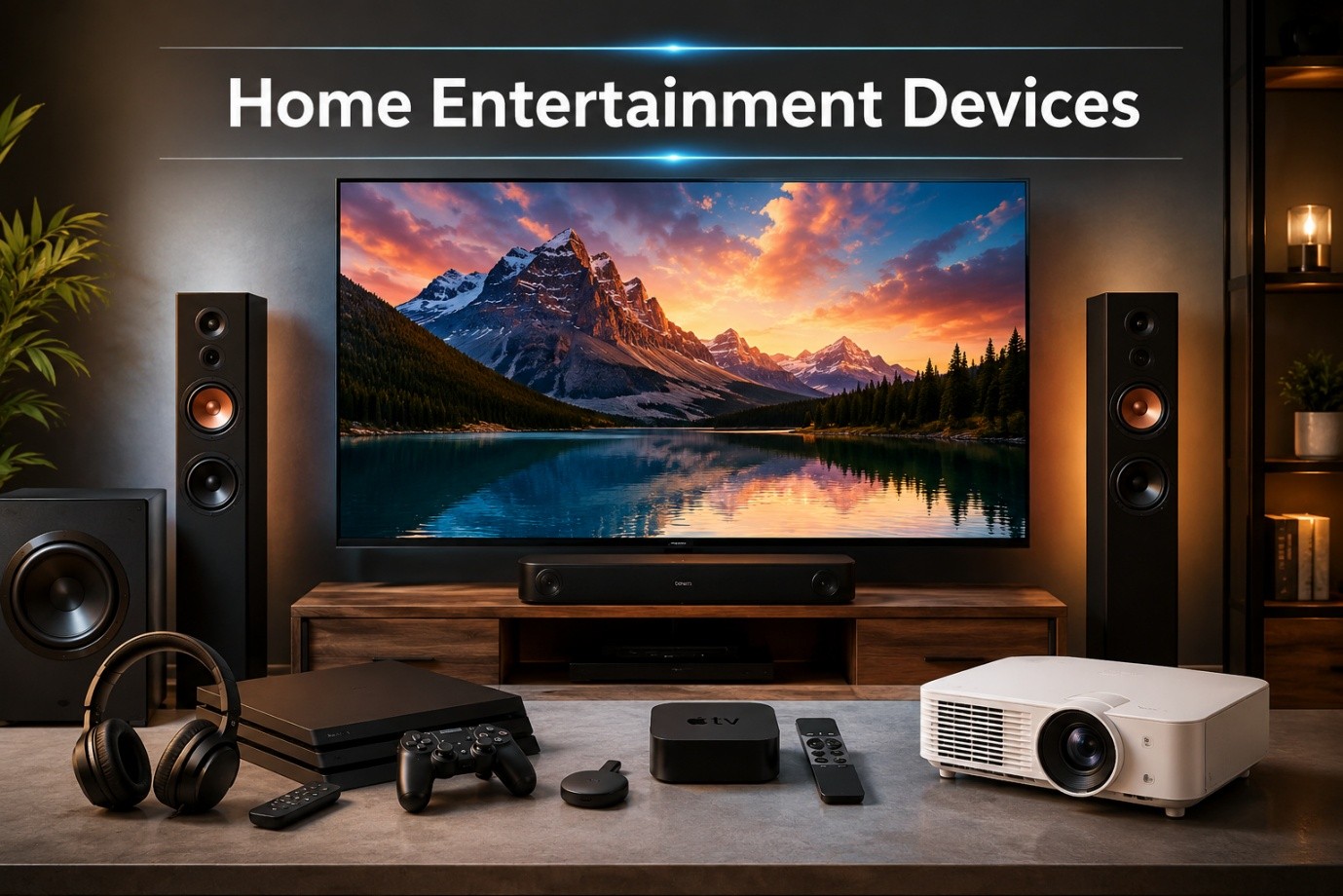
The home entertainment devices market has evolved far beyond televisions and audio systems. Today, it represents an interconnected ecosystem of intelligent devices designed to transform homes into personalized entertainment hubs. From ultra-high-definition smart displays and immersive surround sound systems to gaming consoles, streaming devices, smart projectors, and AI-powered media platforms, the market is witnessing unprecedented technological advancement. As digital lifestyles continue to reshape consumer behavior, home entertainment has become an essential component of everyday living rather than a luxury purchase.
Consumers across developed and emerging economies are investing in products that deliver cinema-quality experiences, seamless connectivity, and personalized content recommendations. The convergence of artificial intelligence, cloud computing, Internet of Things (IoT), and next-generation wireless technologies has accelerated innovation, making entertainment more accessible, interactive, and immersive than ever before.
What Is Driving the Growth of the Home Entertainment Devices Market?
The expansion of the home entertainment devices market is primarily fueled by changing consumer lifestyles and continuous technological innovation. The increasing availability of high-speed internet has transformed content consumption habits, encouraging households to adopt streaming services, cloud gaming, and connected entertainment ecosystems.
Another significant driver is the growing popularity of hybrid lifestyles, where homes serve multiple purposes including work, education, relaxation, and entertainment. Consumers now seek multifunctional devices capable of delivering exceptional visual and audio experiences while integrating seamlessly with smart home environments.
Rising disposable incomes in developing economies have also expanded the consumer base, enabling millions of households to upgrade from conventional entertainment equipment to premium smart devices.
Evolution of Home Entertainment Technology
The journey of home entertainment technology reflects decades of continuous innovation. Traditional CRT televisions have given way to OLED, QLED, Mini-LED, and MicroLED displays capable of delivering exceptional brightness, color accuracy, and energy efficiency.
Audio technology has undergone a similar transformation. Modern soundbars, wireless speakers, Dolby Atmos systems, and AI-enhanced audio processors recreate immersive surround sound without requiring complex installations.
Gaming has become another pillar of the market. Advanced gaming consoles, virtual reality systems, augmented reality accessories, and cloud gaming services have expanded entertainment beyond passive viewing, creating interactive experiences for users of all ages.
Major Categories Within the Home Entertainment Devices Market
Smart Televisions
Smart TVs remain the foundation of modern home entertainment systems. They integrate streaming applications, voice assistants, artificial intelligence, and personalized recommendations while supporting ultra-high-definition content.
Audio Equipment
Wireless speakers, premium headphones, soundbars, home theater systems, and multi-room audio solutions continue to gain popularity as consumers prioritize immersive sound quality.
Gaming Devices
Gaming consoles, handheld gaming systems, VR headsets, gaming monitors, and cloud gaming accessories are driving strong market demand, particularly among younger demographics.
Streaming Devices
Compact streaming media players provide access to thousands of movies, television shows, live sports, educational content, and music services while simplifying digital entertainment.
Smart Projectors
Portable and laser-based projectors are increasingly replacing traditional televisions for users seeking large-screen cinematic experiences with flexible installation options.
How Artificial Intelligence Is Revolutionizing Home Entertainment
Artificial intelligence has become a defining feature of modern entertainment devices. Rather than simply displaying content, AI actively enhances the viewing and listening experience.
Machine learning algorithms optimize picture quality in real time by adjusting brightness, contrast, color balance, and motion clarity based on the content being viewed. Voice recognition systems allow users to control devices naturally without physical remotes.
AI recommendation engines analyze viewing habits to deliver highly personalized content suggestions, increasing user satisfaction while reducing search time. Predictive maintenance features also monitor device performance and identify potential issues before they affect functionality.
Consumer Trends Shaping Global Demand
Several evolving consumer preferences continue to influence purchasing decisions worldwide.
Consumers increasingly value convenience, preferring wireless connectivity and unified ecosystems over standalone devices. Sustainability has emerged as another important purchasing criterion, encouraging manufacturers to develop energy-efficient products using recyclable materials and environmentally responsible manufacturing processes.
Minimalist home designs have also influenced product aesthetics. Modern entertainment devices feature slim profiles, concealed wiring, and elegant industrial designs that complement contemporary living spaces.
Additionally, demand for personalized entertainment experiences has encouraged manufacturers to introduce customizable user interfaces, adaptive sound profiles, and family-friendly content management systems.
Challenges Facing the Home Entertainment Devices Market
Despite strong growth opportunities, manufacturers face several industry challenges.
Rapid technological advancements shorten product life cycles, requiring continuous investment in research and development. Supply chain disruptions, semiconductor shortages, fluctuating raw material prices, and global economic uncertainty can influence production costs and product availability.
Cybersecurity is another emerging concern as connected entertainment devices become integrated into broader smart home networks. Protecting consumer privacy and ensuring secure software updates remain essential priorities for manufacturers.
Emerging Technologies Transforming the Industry
The future of home entertainment will be shaped by technologies that enhance immersion and connectivity.
Cloud gaming will reduce dependence on expensive gaming hardware by enabling high-performance gameplay through remote servers.
Extended Reality (XR), combining virtual reality, augmented reality, and mixed reality, will introduce entirely new forms of interactive entertainment.
8K displays, AI-generated content enhancement, holographic projection technologies, advanced spatial audio, and ultra-low-latency wireless communication will further elevate the user experience.
Blockchain technology may also play an increasing role in digital content ownership, licensing, and secure media distribution.
Sustainability Is Becoming a Competitive Advantage
Environmental responsibility has become a strategic differentiator within the home entertainment devices market.
Manufacturers are increasingly investing in recyclable packaging, modular product designs, lower power consumption, repair-friendly components, and responsible electronic waste management programs.
Consumers worldwide are showing greater preference for brands that demonstrate measurable commitments to sustainability while maintaining premium product performance.
Competitive Landscape
- Samsung Electronics
- LG Electronics
- Sony Corporation
- Panasonic Corporation
- Philips (Koninklijke Philips N.V.)
- Bose Corporation
- Yamaha Corporation
- Vizio Inc.
- Hisense Group
- Sharp Corporation
- Harman International (Samsung subsidiary)
- JVC Kenwood Corporation
- Apple Inc.
- Amazon.com, Inc.
- Google LLC (Alphabet Inc.)
- Microsoft Corporation
- Xiaomi Corporation
- Sonos Inc.
- Roku Inc.
- TCL Technology Group
Future Outlook
According to our Growth Market Report, The future of the home entertainment devices market extends well beyond larger screens and improved sound quality. The next generation of entertainment ecosystems will deliver adaptive, context-aware experiences capable of understanding user preferences, environmental conditions, and individual viewing habits.
Artificial intelligence will enable devices to automatically optimize content, synchronize multiple connected products, and provide increasingly personalized recommendations. Immersive technologies such as spatial computing, holographic visualization, and mixed reality entertainment will gradually transition from niche applications to mainstream household experiences.