






Market Summary
According to our research intelo, the Global Skincare Market size was valued at $163.5 billion in 2024 and is projected to reach $275.2 billion by 2033, expanding at a robust CAGR of 6.1% during the forecast period of 2025–2033. The primary driver for this impressive growth is the increasing consumer focus on personal appearance and wellness, which is being further amplified by social media influence and the rising awareness of skincare routines across all age demographics. Additionally, the proliferation of innovative products and formulations tailored to specific skin concerns—such as anti-aging, hydration, and sun protection—continues to fuel demand globally. This dynamic market is also being shaped by the growing preference for natural and organic ingredients, as consumers become more health-conscious and environmentally aware.
Introduction: Skincare Is No Longer About Looking Good
The skincare market has evolved far beyond vanity. What was once a shelf of creams and cleansers has transformed into a science-driven ecosystem where dermatology, biotechnology, data analytics, sustainability, and mental wellness intersect. Today’s skincare products are expected not just to beautify, but to repair, protect, adapt, and even communicate with the skin.
This shift has quietly turned the skincare market into one of the most intellectually dynamic consumer industries of the modern era.
Skin as a Living Interface, Not a Passive Surface
Modern skincare thinking treats skin as a responsive biological interface—one that reacts to climate, stress, diet, microbiome shifts, pollution, and even digital exposure.
The Rise of Skin Intelligence
Research now shows that skin cells “remember” damage and environmental stress. This has pushed brands to move away from generic hydration claims toward barrier intelligence, cell signaling, and epigenetic skin responses. Products are being formulated to influence how skin behaves, not just how it appears.
The Molecular Arms Race: Ingredients Are Getting Smarter
Gone are the days when “natural vs chemical” defined the conversation. The market has entered a molecular arms race.
Precision Actives Take Center Stage
- Encapsulated retinoids that release gradually to reduce irritation
- Biomimetic peptides that imitate the skin’s own repair signals
- Postbiotics that stabilize the skin microbiome rather than disrupt it
The winning products are not louder—they are more precise.
Personalization: One Skin, One Formula
Personalization is no longer a marketing buzzword; it is becoming the market’s structural backbone.
Data-Driven Skincare Ecosystems
AI-powered skin scans, climate-aware formulations, and lifestyle-based product recommendations are reshaping how consumers interact with brands. Skincare routines are increasingly built like algorithms—constantly adjusted based on humidity, UV exposure, sleep patterns, and stress levels.
This has created a shift from products to skincare systems.
The Quiet Power of Dermatology-Led Brands
Interestingly, the fastest trust growth is happening among brands that do less marketing and more clinical validation.
Clinical Credibility as Currency
Consumers are now reading ingredient lists like nutrition labels. Dermatologist-tested, clinically proven, and evidence-backed claims are becoming non-negotiable. In this environment, transparency is no longer optional—it is a growth lever.
Sustainability Moves from Packaging to Formulation
Early sustainability efforts focused on recyclable bottles. The market has moved far beyond that.
The New Definition of “Clean”
- Waterless formulations reducing supply-chain strain
- Fermentation-based actives replacing resource-intensive botanicals
- Lab-grown alternatives to rare natural ingredients
Sustainability is no longer about optics; it is about formulation ethics and supply resilience.
Men, Teens, and Aging Consumers Rewrite Demand Curves
The skincare market is expanding sideways, not just upward.
Demographic Expansion, Not Saturation
- Men’s skincare is shifting from basic grooming to barrier repair and anti-inflammation
- Teen skincare is focusing on prevention, not correction
- Aging consumers are demanding longevity science, not “anti-aging” clichés
Each group brings distinct physiological needs, forcing brands to rethink product architecture.
Competitive Landscape
- L’Oréal
- Unilever
- Procter & Gamble (P&G)
- Estée Lauder Companies
- Johnson & Johnson
- Shiseido Company
- Beiersdorf AG
- Colgate-Palmolive Company
- Amorepacific Corporation
- Kao Corporation
- Coty Inc.
- Mary Kay Inc.
- Revlon Inc.
- LG Household & Health Care
- Avon Products Inc.
- Clarins Group
- Oriflame Cosmetics
- Pierre Fabre Group
- Henkel AG & Co. KGaA
- GlaxoSmithKline (GSK)
The Influence of Mental Wellness on Skin Health
A subtle but powerful trend is emerging: skincare as emotional regulation.
Neurocosmetic Innovation
Products designed to reduce skin inflammation caused by stress hormones are gaining attention. Fragrance molecules are now engineered to influence mood, not just scent. Skincare routines are being framed as rituals of control in an increasingly chaotic world.
Retail Is Becoming Educational, Not Transactional
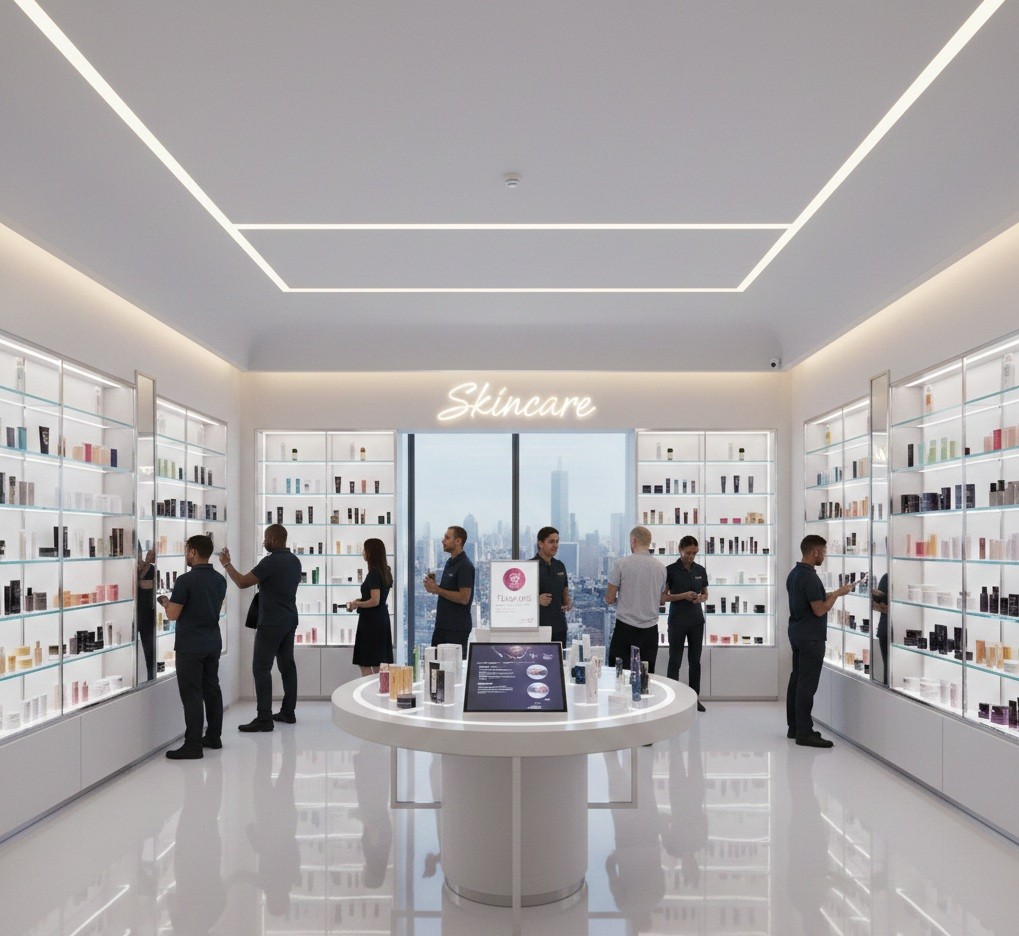
Consumers no longer want to be sold to—they want to be informed.
Knowledge-First Commerce
The most successful skincare platforms are investing in skin education, ingredient literacy, and routine logic. Retail is evolving into a guided experience, where trust is built through understanding, not discounts.
The Skincare Market’s Real Competitive Advantage
The future winners of the skincare market will not be those with the most products—but those with the deepest understanding of skin biology, human behavior, and environmental interaction.
From Products to Partnerships
Brands are slowly becoming long-term skin health partners rather than one-time sellers. Loyalty is shifting from brand love to biological results.